
INFLAMMATION:
25 March 2026
Fibroblasts: Organizers of the intestinal immune system
RESEARCH:
Intestinal immune responses must be carefully balanced, as disruptions can lead to conditions such as inflammatory bowel disease. A new study sheds light on how immune cells are organized in the human intestine.
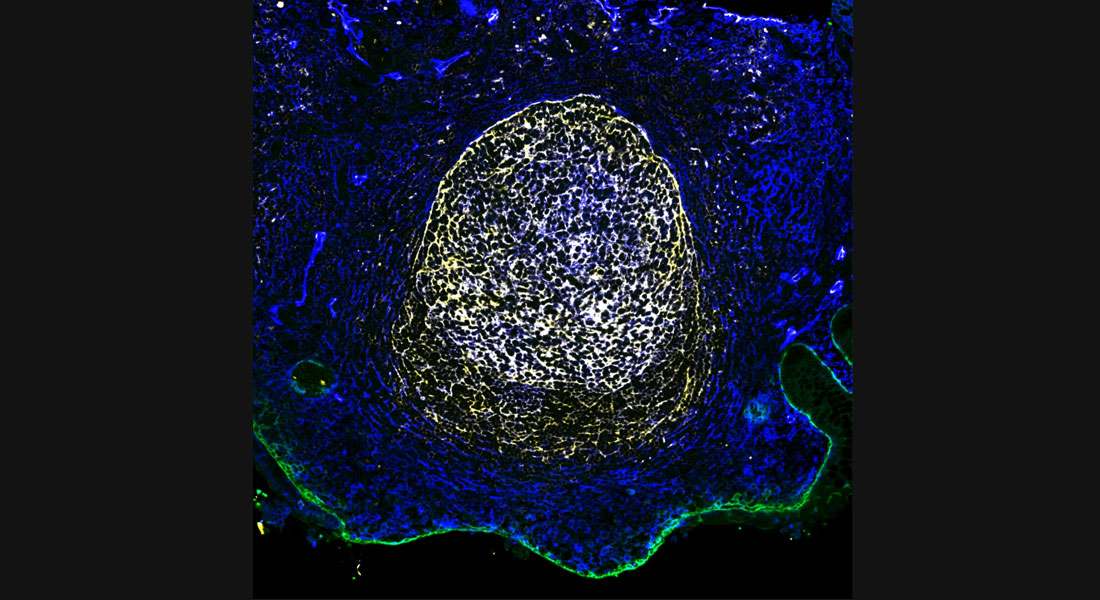
The researchers identify structural cells known as fibroblasts that act as “organizers,” guiding immune cells to the right locations and supporting their function.
Our body is in constant contact with trillions of microbes that make up our gut microbiota, requiring close immune monitoring. Important immune cells include plasma cells, which produce antibodies, and T cells, which release signaling molecules called cytokines. Their proper function depends on local support from intestinal structural cells known as fibroblasts, which guide their activation, positioning, and survival.
A new study from the Barrier Immunology group at the LEO Foundation Skin Immunology Research Center (SIC), led by Urs Mörbe and William Agace, provides a detailed picture of these intestinal fibroblasts. For the first time in humans, the researchers also describe how these cells function in human gut-associated lymphoid tissues, specialized immune cell hubs in the intestine where immune cells gather and wait to become activated.
In collaboration with clinicians at Herlev and Hvidovre Hospital, the team found that these tissues contain fibroblasts with a surprisingly high diversity, which create supportive niches for immune cells, helping them survive over time and become activated.
Assistant Professor Urs Mörbe explains:
“Our findings show how the body ensures that the right immune cells are activated in the right place, important to maintain a balance between tolerating harmless microbes and defending against harmful ones.”
He adds: “We found that fibroblasts in the intestine are highly diverse and act as organizers, guiding immune cells to the correct locations, supporting their survival, thereby helping them monitor fragments from for example gut bacteria. While we still have a lot of open questions, we think that these functions may be altered in inflammatory bowel disease, where we see an overactivation of immune cells.”
These findings were recently published in the Journal of Experimental Medicine.
Contact
Urs Michael Mörbe, Assistant Professor
E-mail: urs.morbe@sund.ku.dk
William Winston Agace, Professor
E-mail: williamagace@sund.ku.dk