
A molecular "brake" that keeps inflammatory signalling in check
New study reveals how the enzyme OTULIN restrains the LUBAC complex to prevent excessive inflammation
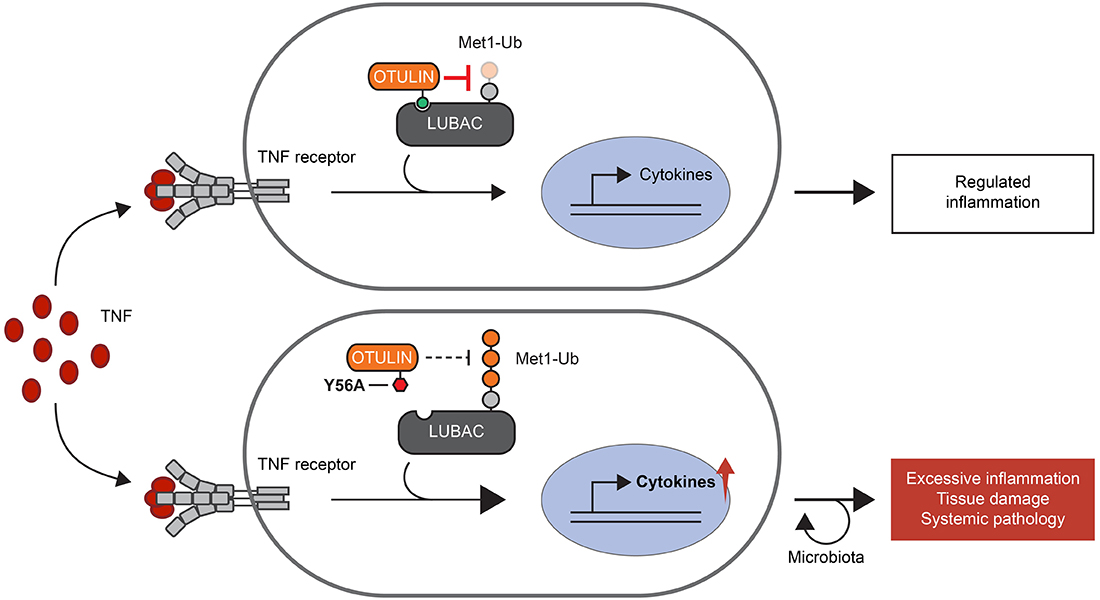
Inflammation helps us fight infection, but when it becomes excessive, it can cause serious tissue damage. A key driver of inflammation and inflammatory diseases is the cytokine tumour necrosis factor (TNF). How cells respond to TNF is regulated by Met1-linked ubiquitin chains, which are built by the enzyme complex LUBAC and removed by the enzyme OTULIN. OTULIN binds directly to LUBAC but the importance of this interaction was unclear.
In a new study published in Molecular Cell, SIC researcher Wenxin Lyu from the Molecular Immunology and Inflammation group and colleagues investigated this interaction using genetically engineered mice with a single amino acid change in OTULIN that prevents its binding to LUBAC. The mutant mice were healthy but highly sensitive to TNF-induced toxicity, developing a systemic inflammatory response partly driven by damage to the intestinal barrier and exposure to the microbiota. During Listeria infection, the mutant mice also developed more severe TNF-mediated immunopathology, despite having similar bacterial numbers. These findings suggest that the OTULIN-LUBAC interaction prevents excessive inflammatory responses and protect tissues from TNF toxicity.
At the molecular level, the study shows that when OTULIN does not bind, LUBAC modifies itself with ubiquitin chains, which increases its activity. This increases LUBAC activity, which boosts pro-inflammatory NF-κB signalling and protects from cell death by stabilising TNF receptor signalling complexes.
These findings may have implications for human disease; mutations in the same region of human OTULIN have recently been reported to cause paediatric-onset pyoderma gangrenosum, a rare and severe inflammatory skin disease. In these patients, OTULIN is active but cannot bind LUBAC, and skin cells become more sensitive to TNF.
Overall, the study identifies the OTULIN-LUBAC interaction as a critical brake on inflammatory signalling and immune-mediated pathology.
Link to the full article: https://doi.org/10.1016/j.molcel.2026.09.039